Before the rise of smartphones and video games, children around the world spent much of their free time playing outdoors. Streets, playgrounds, and open spaces often became lively areas where kids gathered to play simple yet exciting games with friends. These traditional street games required minimal equipment but offered endless opportunities for creativity, teamwork, and physical activity.
Street games remain valuable today because they encourage social interaction and help children develop important life skills. From running and jumping to strategic thinking and coordination, outdoor play supports both physical and mental development. Many of these games have been passed down through generations and are still enjoyed in different cultures.
Understanding different street games highlights how simple outdoor activities can create lasting memories and strengthen community bonds among children and families.
Tag – The Ultimate Running Game
Tag is one of the simplest and most popular street games played by children worldwide. One player is designated as “it” and must chase the other players in an attempt to tag them.
Once tagged, the new player becomes “it,” and the chase continues. The game requires open space where participants can run freely.
Within lively outdoor street games and neighborhood play activities, tag remains a favorite because it encourages speed, agility, and quick reactions.
Children enjoy the excitement of trying to avoid being caught while staying active and engaged.
Hopscotch – A Classic Balance Game
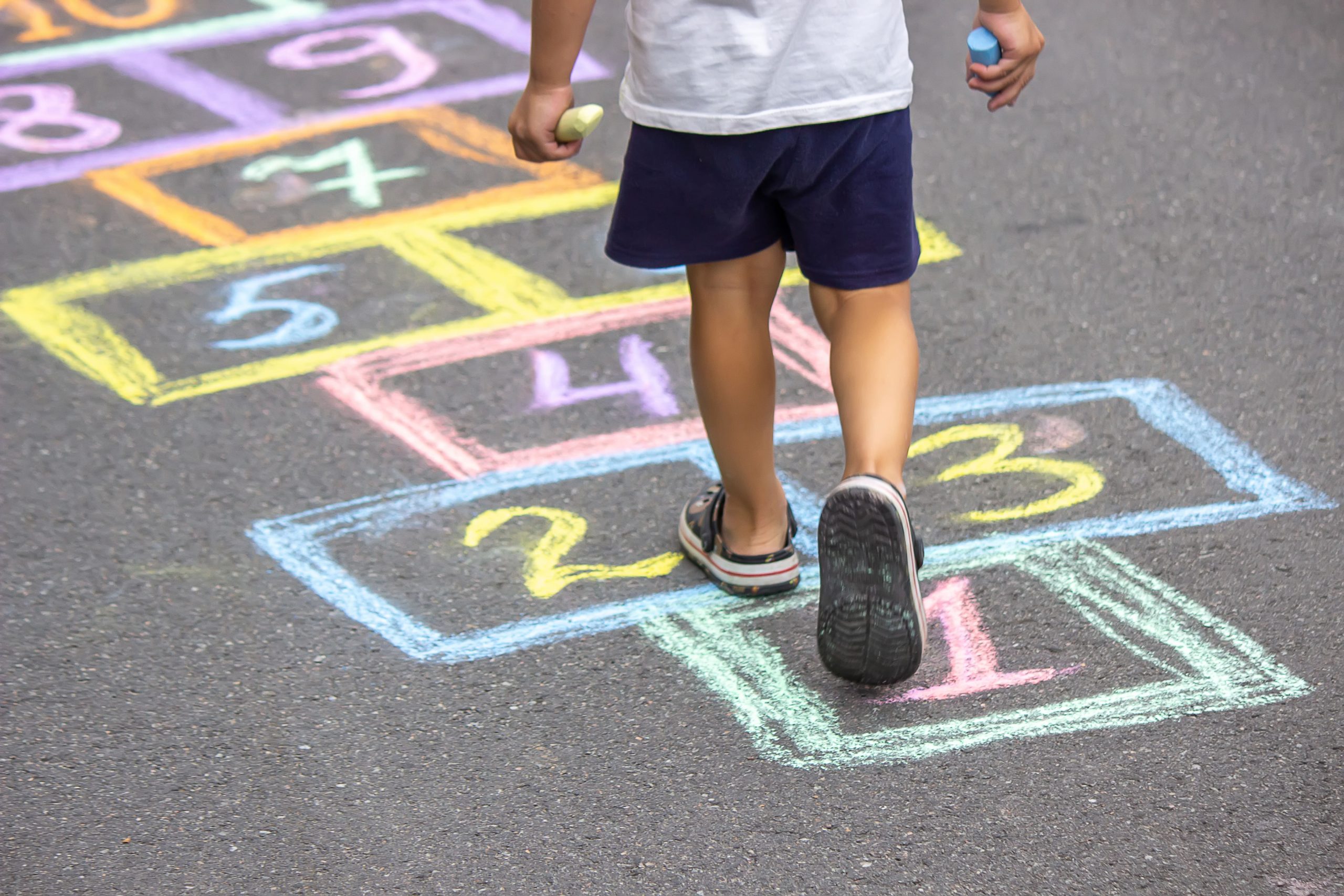
Hopscotch is another well-loved street game that requires only chalk and a small object such as a stone. Players draw numbered squares on the ground and take turns tossing the stone into a square.
The goal is to hop through the pattern on one foot while avoiding the square containing the stone.
Within creative kids outdoor play and traditional street game ideas, hopscotch helps develop balance, coordination, and concentration.
Because it is simple to set up, children can easily organize the game in driveways, sidewalks, or playgrounds.
Hide and Seek – A Game of Strategy
Hide and seek has entertained children for generations. One player closes their eyes and counts while the others hide in different spots around the play area.
After counting, the seeker searches for the hidden players.
This game encourages creativity in choosing hiding places and builds suspense as players try to avoid being discovered.
Within engaging outdoor street games and neighborhood play activities, hide and seek promotes problem-solving and observation skills.
Children enjoy both hiding and searching roles, making the game versatile and exciting.
Kick the Can – Team-Based Adventure
Kick the Can combines elements of tag and hide and seek, creating a more dynamic street game.
One player guards a can while others hide. Hidden players try to sneak back and kick the can without being caught by the guard.
If the can is kicked successfully, previously captured players are freed.
Within energetic kids outdoor play and traditional street game ideas, this game encourages teamwork, strategy, and quick thinking.
Its cooperative elements make it especially exciting when played in larger groups.
Four Square – Skill and Coordination
Four Square is commonly played using a rubber ball and a square divided into four sections on the ground.
Players bounce the ball between squares while attempting to eliminate opponents by forcing them to miss the ball.
The game requires hand-eye coordination and quick reflexes.
Children often create variations with different rules, making the game adaptable to different skill levels.
Four Square encourages friendly competition and continuous movement.
Jump Rope Challenges
Jump rope is both a game and a physical activity that children enjoy in many cultures. It can be played individually or with groups taking turns jumping over a spinning rope.
Players often add rhymes, counting games, or trick jumps to make the activity more engaging.
Jump rope improves coordination, endurance, and rhythm.
This timeless game continues to be a favorite among children who enjoy energetic outdoor play.
Conclusion
Street games have long been an important part of childhood, bringing children together for active play and shared experiences. Games such as tag, hopscotch, hide and seek, kick the can, and four square require little equipment yet offer countless hours of entertainment. These traditional outdoor activities encourage teamwork, creativity, and physical fitness while helping children build friendships and social skills. In addition to promoting healthy exercise, street games allow kids to develop problem-solving abilities and confidence through friendly competition. Even in today’s technology-driven world, these classic games continue to remind families and communities of the joy of simple outdoor play. Encouraging children to participate in street games helps preserve these traditions while creating meaningful memories that last a lifetime.
About the Author